
AI Puts Defenders on the Clock, Says ASD

patch window deadline shortens

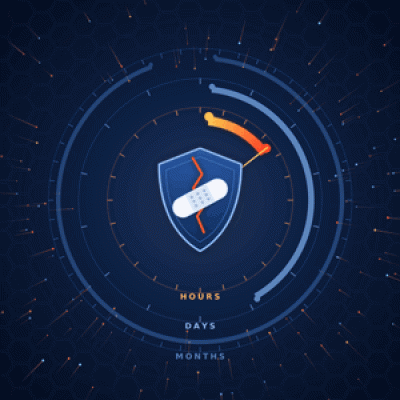
Organisations now have days, and sometimes only hours, to patch new vulnerabilities before AI-assisted attackers exploit them, Australia's cyber security agency has warned.

The warning is in the Australian Signals Directorate's Annual Cyber Threat Report 2025-26, which covers the financial year to 30 June 2026. ASD's Australian Cyber Security Centre (ACSC) responded to more than 1,500 incidents, up 20 per cent on the previous year.

Incidents have risen 36 per cent over five years. The ACSC also notified organisations of potential malicious activity more than 4,400 times, almost 80 per cent more than in 2024-25.

Of the incidents it handled, 362 were identified only after the ACSC alerted the organisation concerned. More than half of its individual notifications drew on declassified intelligence.

The report says AI has not introduced new cyber threats but has amplified and accelerated existing ones. Attackers now need less skill and effort to find vulnerabilities, develop exploits and attack at scale.

The ACSC has previously observed that most exploitation happens within two weeks of disclosure. Some are exploited within 48 hours of a patch being released. The agency expects AI tools to compress that window further over the next 12 months.

Old weaknesses still matter. During the year the ACSC recorded the successful exploitation of a vulnerability first identified in 2008.

Data breaches handled by the agency rose sharply. It responded to 98 data breach incidents, up 66 per cent and just over 6 per cent of all incidents.

Fewer Severe Incidents, Deeper Compromises

The number of higher-category incidents fell, with only one Category 2 incident recorded. However, extensive compromises rose from 26 in 2024-25 to 40 in 2025-26.

Ransomware held steady at 139 incidents, but extensive ransomware incidents rose from 16 to 24. Health care, professional services and manufacturing remained the most affected sectors.

Government again reported the most incidents. Federal agencies accounted for 32 per cent and state and local government for 16 per cent, which the ACSC attributes to their additional reporting obligations.

Health care and social assistance was the most frequent non-government reporter at 7 per cent. Manufacturing entered the top 10 with the largest increase of any sector.

Critical infrastructure accounted for 154 incidents, about 10 per cent of the total. Phishing was the leading initial access technique in those incidents at 36 per cent, ahead of valid accounts at 16 per cent.

Compromised accounts and credentials were among the most frequently reported incident categories across government, industry and critical infrastructure. The report says stolen usernames, passwords, tokens and sessions are now among the most common ways into Australian networks.

Across all incidents, phishing appeared in 39 per cent and compromised accounts in 21 per cent. Gathering victim identity information fell from 30 per cent to 13 per cent as attackers moved toward direct access.

Businesses reported an average cost of $93,500 per cybercrime report, up 16 per cent. Medium businesses were hardest hit at $141,300 per report, up 45 per cent.

Help Desks and Code Repositories

The report highlights social engineering aimed at IT help desks. It cites the Scattered Spider group, which researches staff before calling help desks to reset passwords or transfer multi-factor authentication tokens.

In one case study, an Australian bank reported two calls to its internal help desk in August 2025. The callers impersonated a Melbourne-based employee, using staff details including an employee ID number.

They obtained names, job titles and corporate phone numbers for several staff. The bank traced the calls to Hong Kong and has since run an awareness campaign for its teams.

Online code repositories are another growing target. Since September 2025 the ACSC has tracked attackers using stolen credentials and tokens to modify public packages, leak secrets and expose private repositories.

The self-replicating Shai-Hulud worm compromised hundreds of GitHub software packages. It harvested credentials, published them in public repositories, then used them to infect other packages maintained by the same developer.

The ACSC says organisations must be able to rapidly identify which software packages, and which versions, are installed across their environments.

The report repeats the five priorities of ASD's Cyber Action Year. They are replacing or mitigating legacy technology, best-practice event logging, supply chain management, post-quantum readiness and preparing for AI-enabled threats.

It sets the end of 2030, or sooner, as the point to stop using traditional asymmetric cryptography. An accompanying factsheet for businesses and organisations adds that critical infrastructure entities should prepare to isolate systems and networks for up to three months.

The report also notes that ASD released its Essentials series in October 2026. It evolves the Essential Eight into a principles-based framework tailored to different technology environments.

In his foreword, Deputy Prime Minister and Defence Minister Richard Marles describes AI as the defining force in the threat landscape over the past year. He adds that new threats have recently emerged from the unintended actions of AI agents and model testing.


Business Solution