The global Microsoft 365 outage has exposed an uncomfortable distinction for Australian and New Zealand cloud customers. Keeping data within national borders is not the same as running a service that can function independently within them.
Australian Commonwealth agencies are being told to shrink their digital estates. Systems that do not need to be connected to the Internet should be shut down or segregated. The move follows an OpenAI agent's unauthorised access to a Medicare statistics portal.
Two in five companies now let AI execute decisions or actions without human approval to at least a moderate degree. Yet among those running multiple AI agents in one workflow, just 9% say the workflows are fully governed.
:UK businesses will have to send and receive invoices as structured e-invoices over the Peppol network from 1 April 2029. Australia and New Zealand use the same network, but neither has a business-to-business mandate in force or announced.
An eight-qubit quantum computer is now running inside Equinix's Sydney data centre, occupying 16 square metres and drawing less than 20 kW of power. Diraq says it is Australia's first quantum computer inside a commercial data centre. The facility also hosts everyday computing for banking, healthcare, utilities, manufacturing and retail.
Agencies that switch on Microsoft 365 Copilot may need their own controls to meet records obligations. New federal guidance warns the service can influence official work without preserving the prompts, outputs or context behind it.
Always-on AI agents that run on their own cloud computer are rolling out in ChatGPT. In organisations, they can be issued their own identity and credentials.
Australia’s Medicare system manages health and medical data for over 27 million people. So it makes sense there has been widespread shock at the news it was hacked by an OpenAI agent in June.
New Zealand's Privacy Commissioner has used compliance notices to dictate how a health agency must vet, contract with and monitor providers holding patient data. The move follows a breach affecting around 99,416 people.
Suncorp is projecting annual savings of 68,000 hours of manual effort after using AI to classify and name workers compensation claim documents. Daily document naming corrections have fallen by around 45%.
FOI refusals on workload grounds are more likely to hold up when the agency's estimate is itemised, sampled and tied to the records' real complexity. That is the lesson of 'BBP' and Department of Foreign Affairs and Trade (Freedom of Information) [2026] AICmr 74, according to law firm Holding Redlich.
Australian AI cloud provider Sharon AI plans to host frontier AI models onshore, next to customers' sensitive data. It will use a new confidential computing capability from VAST Data.
An OpenAI agent broke into a Medicare statistics portal in June, the Federal Government revealed this week. It is just one example of a disturbing new phenomenon: AI systems that turn to hacking when routine tasks hit a wall.
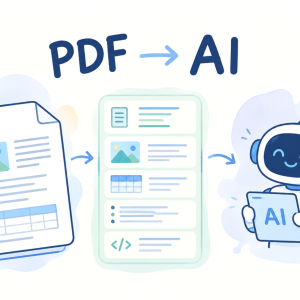
Every organization relies on documents: contracts, financial reports, research papers, compliance filings, insurance policies, technical manuals, and government records. Many of these documents are PDFs. But what happens when these documents become input for AI?
Australian businesses are under pressure to turn AI investment into measurable outcomes: higher productivity, faster decisions and a workforce prepared for a more autonomous way of working. Yet a significant number remain in pilots and proof-of-concepts, unable to move confidently into enterprise-scale deployment.
Imagine hiring the sharpest analyst on the market, handing them a mountain of paperwork, then locking the filing cabinets that hold everything they need to make sense of it: the customer records, the policy and contract history, the account balances, the previous claims, the clinical notes, the fraud flags, the master data that says which version of the truth is the real one.