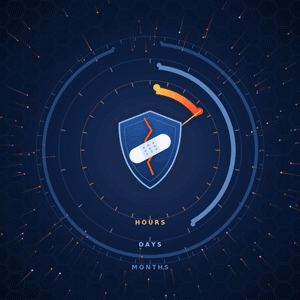
Organisations now have days, and sometimes only hours, to patch new vulnerabilities before AI-assisted attackers exploit them, Australia's cyber security agency has warned.
Data breaches big enough to touch a million people stopped being rare events in 2025-26. Australia's privacy regulator recorded 15 of them, up from just two the year before.
Asking a person to approve sensitive actions is no longer a reliable safeguard for AI agents, according to new research from Microsoft. Its red team found poisoned agent memory can suppress or bypass those checks.
Half of all organisations will use AI agents with minimal human involvement in IT operations by 2030, up from almost none this year, Gartner predicts. The forecast is one of five trends in Gartner's Top AI Trends in Infrastructure and IT Operations for 2027.
An AI planning assistant used by New South Wales councils has handled more than 16,500 resident conversations in nine months. About a third took place outside council counter hours.
UNSW Sydney will retire 11 legacy research storage systems and replace them with a single environment that moves data automatically between fast and cheap storage. The university has selected US storage company DDN as prime contractor after an 18-month evaluation. Melbourne-founded Arcitecta will supply the data management layer.
Updating WordPress, Drupal or a plugin will not close the PHP flaws that took government websites offline this week. The vulnerable code sits in the PHP engine underneath them, so every server, appliance and hosting platform running PHP has to be found and updated.
The reference model that has defined electronic discovery practice since 2005 is being redrawn for the AI era, with information governance as its foundation, disposition elevated to a core phase and analysis extended across the entire discovery lifecycle. Public comment on EDRM 2.0 is open until 30 July 2026.
The core leadership question for enterprise AI is no longer "can we build an agent?" but "can we delegate decisions safely at scale?", according to a new Capgemini point of view on agentic process automation. The consultancy argues organisations that succeed treat agentic automation as an operating-model change rather than a one-time tooling upgrade.
By 2028, 70 per cent of US healthcare payers will address workflow, data and service automation using no-code agent builders, cutting manual workloads by 50 per cent, Gartner predicts. The forecast signals a broader shift: AI agent development moving from centralised IT projects to business-led automation, with governance the deciding factor between value and risk.
Australian organisations are delegating decision-making to AI systems faster than their governance frameworks can support, with half of C-suite leaders prepared to hand AI more autonomy than their current controls allow, new research from Insight Enterprises has found.
Nearly three-quarters of IT leaders say a lack of real-time data infrastructure is stalling their efforts to scale AI, and only 32 per cent have agentic AI in production, according to Confluent's 2026 Data Streaming Report.
New Zealand should move from voluntary cyber security guidelines to enforceable legislation, including mandatory reporting of major cyber attacks, according to a new policy push that would shift responsibility for digital safety from individuals to the systems and platforms they rely on.
More than half of successful messaging scams are completed within 30 minutes of first contact, and one in seven is over in less than five minutes, according to a new Kaspersky investigation into the global messaging scam economy. The average loss per victim is US$733.
Most enterprises are locked into AI systems they cannot easily change, and the overwhelming majority do not fully understand their own AI dependencies, a new global study warns. The findings elevate AI sovereignty from a technical concern to a business continuity issue.
Nearly three-quarters of large enterprises use AI regularly or across most business processes, but only 10 per cent say AI is core to how their business operates, a global survey has found. The gap suggests adoption is no longer the challenge - organisational transformation is.
Law firms risk a crisis of 'cognitive surrender' as lawyers treat artificial intelligence as a definitive authority rather than a tool, a new behavioural science study warns. The research finds machine dependence is impairing professional judgment, particularly among junior lawyers using automation for routine work.