Australian businesses are under pressure to turn AI investment into measurable outcomes: higher productivity, faster decisions and a workforce prepared for a more autonomous way of working. Yet a significant number remain in pilots and proof-of-concepts, unable to move confidently into enterprise-scale deployment.
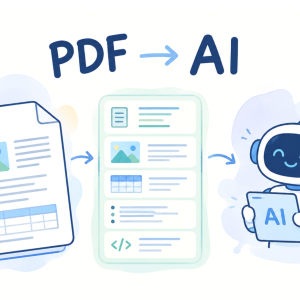
Every organization relies on documents: contracts, financial reports, research papers, compliance filings, insurance policies, technical manuals, and government records. Many of these documents are PDFs. But what happens when these documents become input for AI?
Imagine hiring the sharpest analyst on the market, handing them a mountain of paperwork, then locking the filing cabinets that hold everything they need to make sense of it: the customer records, the policy and contract history, the account balances, the previous claims, the clinical notes, the fraud flags, the master data that says which version of the truth is the real one.
Large language models will abandon a correct answer if a user repeats a false statement often enough. Some will flip back and forth on the same claim within a single conversation.
A cybersecurity incident that stopped a global medical device manufacturer from making or shipping product has ended with operations fully restored. The one clinical workflow it degraded is working again.
An AI agent compromised roughly 30 companies, exfiltrated 3.1TB of data and drafted the ransom demands. Token costs ran between 40 cents and four dollars per victim.
Australian organisations now have a common vocabulary for describing how sensitive their data is. The same scheme sets out what protection each category warrants, and how that expectation travels when data is shared.
Most healthcare encounters in Australia happen in general practice and other primary care settings. Yet this data has historically been excluded from comprehensive, nationally consistent collections, according to the Australian Institute of Health and Welfare's flagship Australia's Health 2026 report.
Victorian government departments have made limited, and in some cases no, progress fixing shortcomings in the state's digital services platform identified five years ago. They also gave the Auditor-General inaccurate reports about the status of their remediation work.
The share of organisations unable to tell whether employees are using unsanctioned AI tools has nearly tripled in a year, rising from 6.3 per cent to 17.6 per cent. For AI agents the blind spot is larger still, with 21.1 per cent of organisations unable to account for unsanctioned agent activity.
Ancestry.com, the world's largest online family history platform, has cut a record digitisation process that once took nine months of manual indexing down to under nine days, using proprietary handwriting-recognition AI to help push its collection past 71 billion records and restore subscription revenue growth after years of stagnation.
The reference model that has defined electronic discovery practice since 2005 is being redrawn for the AI era, with information governance as its foundation, disposition elevated to a core phase and analysis extended across the entire discovery lifecycle. Public comment on EDRM 2.0 is open until 30 July 2026.
The core leadership question for enterprise AI is no longer "can we build an agent?" but "can we delegate decisions safely at scale?", according to a new Capgemini point of view on agentic process automation. The consultancy argues organisations that succeed treat agentic automation as an operating-model change rather than a one-time tooling upgrade.
By 2028, 70 per cent of US healthcare payers will address workflow, data and service automation using no-code agent builders, cutting manual workloads by 50 per cent, Gartner predicts. The forecast signals a broader shift: AI agent development moving from centralised IT projects to business-led automation, with governance the deciding factor between value and risk.
Australian organisations are delegating decision-making to AI systems faster than their governance frameworks can support, with half of C-suite leaders prepared to hand AI more autonomy than their current controls allow, new research from Insight Enterprises has found.
Nearly three-quarters of IT leaders say a lack of real-time data infrastructure is stalling their efforts to scale AI, and only 32 per cent have agentic AI in production, according to Confluent's 2026 Data Streaming Report.
New Zealand should move from voluntary cyber security guidelines to enforceable legislation, including mandatory reporting of major cyber attacks, according to a new policy push that would shift responsibility for digital safety from individuals to the systems and platforms they rely on.